
Introduction
Modern diesel vehicles are equipped with Selective Catalytic Reduction systems that rely on a special fluid (known as Adblue/ AUS 32) to significantly reduce harmful nitrogen oxide emissions from the exhaust. Adblue is a high-purity, non-hazardous chemical injected into the exhaust stream to trigger a chemical reaction that converts dangerous NOx gases into harmless nitrogen and water vapor. Most diesel vehicle drivers understand they need to refuel regularly, but far fewer pay adequate attention to their adblue level until a dashboard warning forces them to act. Knowing the early warning signs that your vehicle needs an adblue refill can save you from unexpected problems, inconvenient roadside situations, costly repairs, and potential environmental compliance issues with vehicle emissions regulations.
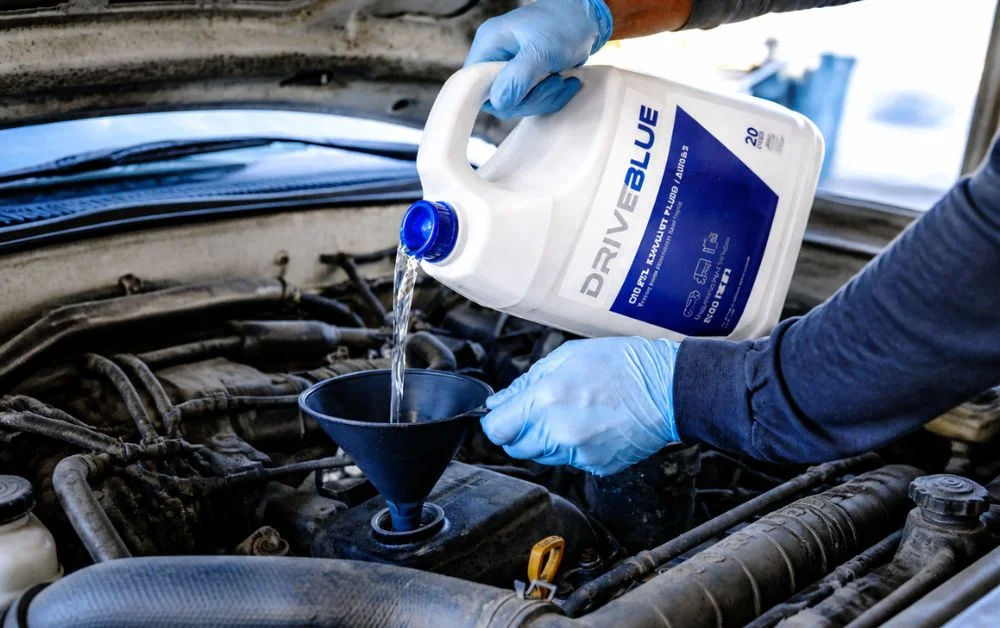
What Is AdBlue and Why Your Diesel Vehicle Needs It
Adblue is a precisely formulated, non-hazardous, and non-flammable liquid composed of 32.5% high-purity automotive-grade urea dissolved in 67.5% deionized water. This specific concentration meets the ISO 22241 standard that governs the quality of this fluid for use in diesel SCR systems. When injected into the exhaust stream ahead of the SCR catalyst, adblue reacts chemically in the presence of exhaust heat to produce ammonia, which then reacts with nitrogen oxides over the catalyst surface to produce harmless nitrogen gas and water vapor. Without adblue, Euro 4, Euro 5 and Euro 6 diesel engines cannot comply with emissions regulations, and vehicle manufacturers build in engine restrictions that activate when the adblue tank is empty to prevent non-compliant operation.
The Warning Light: Your First and Most Important Signal
The clearest and most reliable sign that your vehicle needs an adblue refill is the dedicated warning light on your dashboard. Most modern diesel vehicles are programmed to display an amber or yellow adblue warning indicator when the tank level drops to approximately 10% of its total capacity. At this point, you typically have several hundred kilometers of range remaining before more serious restrictions are imposed, giving you adequate time to source and add adblue before any performance impact occurs. The key is to act on this first warning rather than waiting for the situation to become more urgent. Many drivers make the mistake of noting the warning and continuing to drive, only to find themselves dealing with performance restrictions at an inconvenient time.
Escalating Dashboard Warnings
If the initial adblue warning is not acted upon, the warnings will become progressively more urgent. As the adblue level drops further, the warning light typically changes from amber to red or begins flashing. Many vehicles also display a countdown on the instrument cluster showing the approximate number of kilometers remaining before engine restrictions will be applied. Some vehicles display explicit text messages such as “AdBlue: Start not possible in X km” to convey the seriousness of the situation. These escalating warnings are not to be ignored — the vehicle is communicating that a refill is urgently needed.
Engine Power Reduction
If all adblue warnings have been ignored and the tank reaches empty, the engine management system will typically impose power restrictions. You may experience noticeably reduced acceleration, a lower achievable top speed, and a general sluggishness that makes the vehicle feel quite different to drive normally. This power deration is deliberately programmed by the manufacturer to create an incentive to refill adblue promptly while still allowing the vehicle to be moved safely to a service point. Driving with active power deration places additional stress on the engine and should be avoided by refilling adblue as quickly as possible.
Inability to Start After the Next Key-Off Cycle
For some diesel vehicles — particularly commercial trucks, vans, and certain passenger car models — the programming is even more stringent. When the adblue tank empties completely, these vehicles will allow the current journey to be completed but will then refuse to start at the next ignition cycle until adblue has been added. This is a firm manufacturer restriction designed to ensure the emissions system is always operational when the vehicle is in use. If you experience this situation, the vehicle will need to be supplied with adblue before it can be restarted, which can be very inconvenient in a commercial or fleet context.
Unusual or Stronger Exhaust Smell
An often-overlooked sign that the SCR system is not functioning correctly due to very low or absent adblue is an unusual or noticeably stronger smell from the exhaust. When the SCR catalyst is not receiving adblue, it cannot convert nitrogen oxides effectively, and these gases pass through the exhaust system at higher-than-normal concentrations. If you or people near your vehicle notice an unusual exhaust odor, checking the adblue level should be one of the first diagnostic steps.
How Frequently Should You Check and Refill AdBlue
Adblue consumption rates vary depending on the type of vehicle, engine displacement, driving conditions, ambient temperature, and load. As a practical guide, most diesel passenger cars consume approximately one liter of adblue for every 1,000 to 1,500 kilometers driven. Light commercial vehicles and vans typically consume more. Heavy trucks and buses can consume considerably higher quantities depending on the engine and duty cycle. Most modern vehicles display the current adblue level and estimated remaining range in the instrument cluster, making it straightforward to monitor. A good habit is to check the adblue level every time you refuel and top up if the level is below 50% of tank capacity.
Also read – signs-your-vehicle-needs-adblue-refill-how-to-avoid-engine-issues/
Where to Source Quality AdBlue in the UAE
Blue Me is a trusted manufacturer and supplier of high-quality adblue throughout the UAE. Their product meets ISO 22241 standards, ensuring full compatibility with all SCR-equipped diesel vehicles and protecting your catalyst and dosing system from damage caused by substandard products. Blue Me offers adblue in a range of packaging formats suitable for individual vehicle owners, fleet depots, and commercial operations of all sizes.

Conclusion
The warning signs that your vehicle needs an adblue refill — from the first dashboard amber light through escalating warnings, power deration, and potential start refusal — are your vehicle manufacturer’s way of protecting both your engine and the environment. Recognizing these signals early and acting on them promptly is the responsible and practical approach for every diesel vehicle owner. For reliable, ISO-compliant adblue supply in the UAE, Blue Me is the trusted partner for individual drivers and large fleet operators alike, offering quality products, convenient supply options, and the assurance that your SCR system is protected