
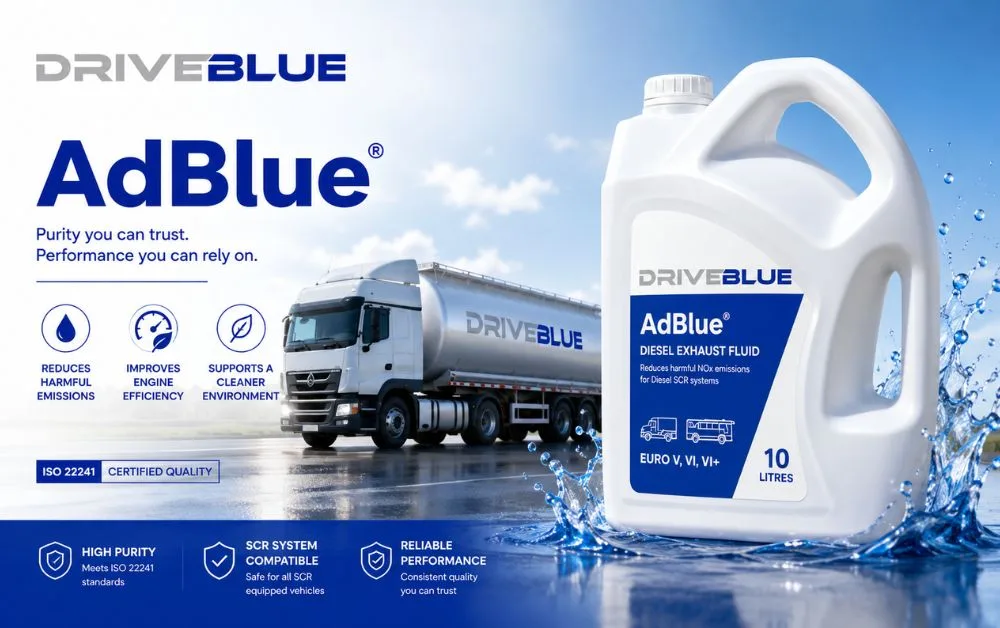
If you drive or manage a diesel vehicle fleet anywhere in the Kingdom, understanding DEF supply, quality standards, and consumption management has become more operationally critical than ever, as Euro 5 and Euro 6 emission standards progressively reshape the commercial vehicle landscape across the GCC region. DEF is no longer an optional consideration — it is a mandatory operational requirement for a growing proportion of diesel vehicles, and running without it can lead to serious consequences for vehicle performance, regulatory compliance, and, in commercial fleets, significant financial disruption due to vehicle downtime.

What Is AdBlue and How Does It Work?

What Is DEF and How Does It Work?

Diesel Exhaust Fluid (DEF) is a precisely formulated aqueous urea solution consisting of 32.5% high-purity urea dissolved in demineralised water. It is used exclusively in Selective Catalytic Reduction (SCR) exhaust aftertreatment systems, now standard across modern Euro 5 and Euro 6 diesel engines. When injected into the hot exhaust stream, DEF undergoes thermal decomposition into ammonia, which reacts with harmful nitrogen oxides (NOx) in the exhaust, converting them into harmless nitrogen gas and water vapour. Without DEF, this catalytic reaction cannot occur, and NOx emissions exceed regulatory limits by a significant margin.

DEF is not a fuel additive and should never be added to the diesel fuel tank. It is stored in a separate, dedicated tank with its own filler cap, specifically designed to prevent misfuelling with diesel or other fluids.

Why DEF Supply Is Critical in Saudi Arabia

Saudi Arabia is progressively aligning its vehicle emission standards with international Euro norms under Vision 2030’s environmental modernization agenda. An increasing proportion of commercial vehicles operating across Saudi Arabia’s road network — including heavy-duty trucks, intercity coaches, construction equipment, and large SUVs — are now equipped with SCR systems that require a continuous, quality-assured DEF supply.

Running out of DEF causes the engine control unit (ECU) to progressively restrict engine performance — reducing torque first, then limiting maximum speed, and in some vehicles, preventing engine restart once stopped. For commercial operators, any of these outcomes can lead to serious operational delays, compliance risks, and financial losses, all of which are preventable through proper DEF supply planning and inventory management.

Read more-Buying AdBlue Online in UAE: Price, Delivery & Quality Made Easy

ISO 22241: The Quality Standard That Protects Your SCR System

Not all DEF products deliver equivalent quality, and this distinction has real consequences. The ISO 22241 standard specifies the precise chemical composition — urea content between 31.8% and 33.2%, with strict limits on contaminants such as metals, aldehydes, and phosphates — required to protect the SCR catalyst from contamination and damage. Using off-specification DEF can lead to crystallization in precision SCR injectors, permanent contamination and degradation of the SCR catalyst, and warranty-voiding damage to the exhaust aftertreatment system. The cost of replacing an SCR catalyst is significantly higher than any short-term savings gained from purchasing lower-quality DEF.

Fleet Consumption Management

DEF consumption typically represents 3%–6% of diesel fuel consumption by volume, depending on engine type, load profile, and driving conditions. For example, a long-haul truck consuming 35 litres of diesel per 100 km will use approximately 1.5–2.0 litres of DEF over the same distance. Fleet managers should integrate DEF consumption into their refuelling logistics and establish planned top-up schedules aligned with vehicle service intervals, rather than relying on reactive emergency refills that can disrupt route planning and operations.

Bulk Storage and Handling
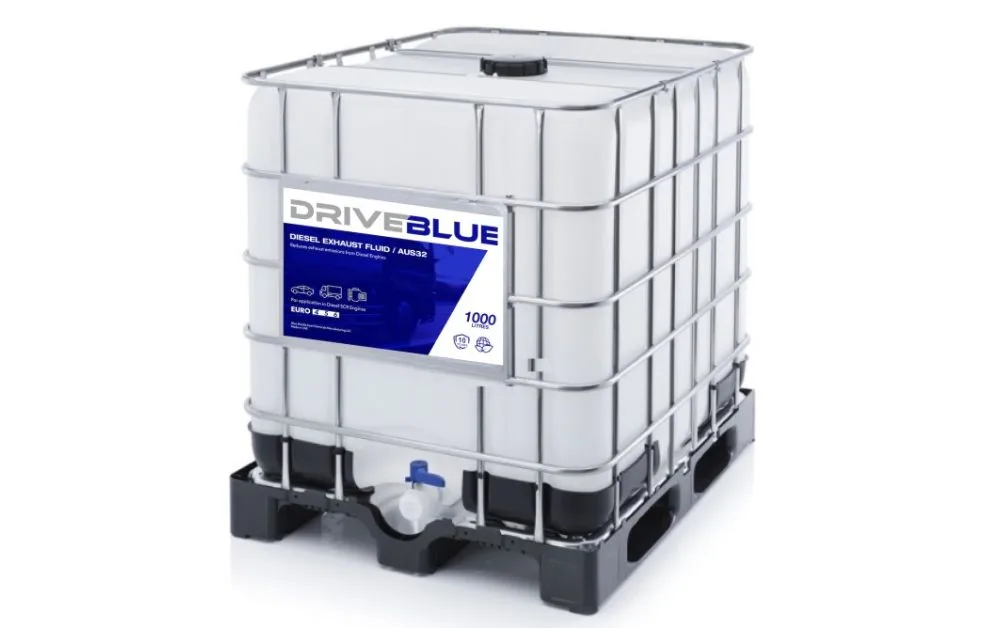
Store DEF in purpose-built tanks made from high-density polyethylene (HDPE) or stainless steel. Never use ordinary steel containers, as DEF can be corrosive to many metals. It should be stored in a shaded, temperature-controlled environment away from direct sunlight. The recommended storage temperature range is -5°C to +30°C. At 25°C, DEF typically has a shelf life of approximately 12–18 months from the manufacturing date. Always verify the manufacturing date on packaged products before acceptance. Dispensing equipment should be cleaned regularly, and only dedicated DEF dispensing tools should be used — never equipment shared with diesel. Maintaining high-quality DEF supply is operationally essential for serious fleet operators across Saudi Arabia and the UAE today.

What Is Diesel AdBlue and Why It matter

Conclusion

Whether you manage a single diesel pickup or a fleet of hundreds of long-haul trucks operating across Saudi Arabia’s vast road network, securing a reliable, ISO 22241-certified DEF supply from a technically competent and service-oriented supplier is a fundamental operational requirement. The per-litre cost of quality DEF is minimal compared to the SCR system repair costs and vehicle downtime caused by contaminated or interrupted supply. Investing in quality DEF and building strong logistics discipline ensures smoother operations, regulatory compliance, and long-term cost efficiency.